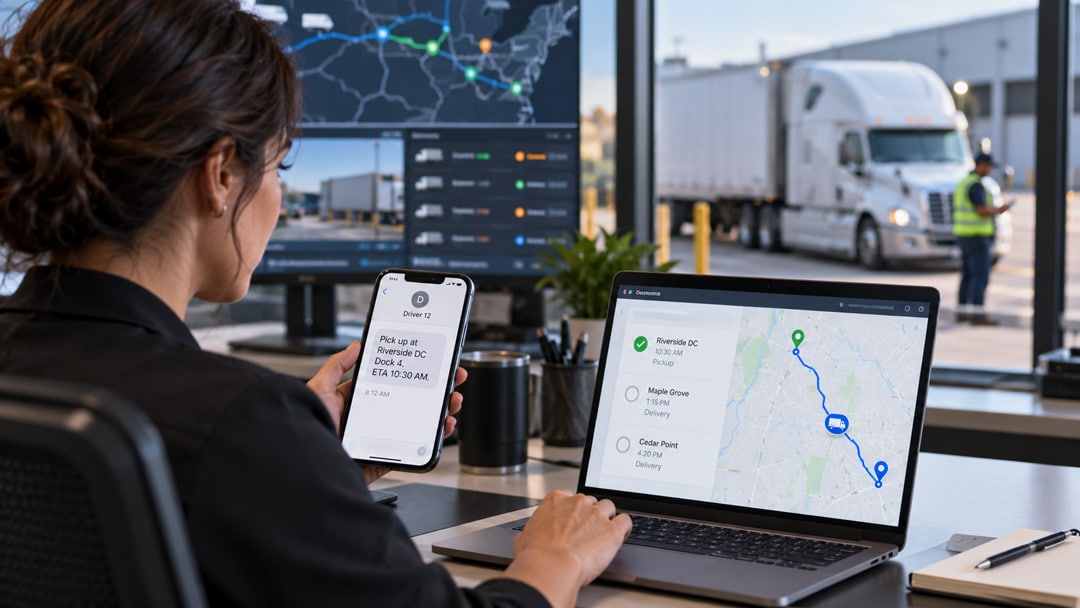
Busy peak times create valuable opportunities for businesses to reach customers, promote special offers, and increase sales. However, higher demand also creates challenges. Marketing teams must manage high message volumes, maintain delivery performance, respond to customer inquiries, and ensure every message reaches the right audience at the right time.
SMS marketing offers a direct way to communicate during these demanding periods. Businesses can use text messages to announce promotions, confirm orders, send appointment reminders, share delivery updates, and notify customers about limited-time offers. Nevertheless, sending more messages does not automatically produce better results. Instead, businesses need a clear strategy that balances speed, relevance, timing, and customer experience.
For example, an e-commerce store may receive a surge in orders during Black Friday, while a restaurant may experience its busiest hours around lunch and dinner. Similarly, a service provider might need to send thousands of appointment reminders before a holiday weekend. In each situation, effective SMS management helps businesses communicate efficiently without overwhelming customers.
Therefore, understanding SMS best practices for busy peak times is essential for companies that rely on timely customer communication. This guide covers 12 practical strategies, a campaign checklist, common mistakes to avoid, and the key performance indicators businesses should track to improve their results.
Why SMS Best Practices Matter During Busy Peak Times
Peak periods often compress weeks of customer activity into a few hours or days. As a result, businesses must handle more communication while maintaining message quality and reliability.
During these periods, customers expect timely updates, accurate information, and convenient ways to interact with businesses. Meanwhile, marketing and customer support teams may face heavier workloads, tighter deadlines, and increased pressure to deliver results.
Without proper planning, businesses risk sending duplicate messages, missing promotional deadlines, exceeding messaging capacity, or contacting customers with irrelevant offers. These mistakes can damage customer trust and reduce campaign effectiveness.
On the other hand, a well-organized SMS strategy helps businesses prioritize urgent communications, automate repetitive tasks, and distribute messages more efficiently.
Consider the Following Benefits:
- Faster communication: Deliver important updates when customers need them.
- Better engagement: Send relevant offers to carefully selected audiences.
- Improved efficiency: Automate repetitive messaging tasks and reduce manual work.
- Fewer errors: Prepare and test campaigns before demand increases.
- Better customer experience: Avoid unnecessary messages and confusing instructions.
- Stronger campaign performance: Track results and adjust your strategy using real data.
Ultimately, successful peak-time SMS marketing depends on preparation, reliable technology, and a clear understanding of customer needs.
12 SMS Best Practices for Busy Peak Times
The following strategies can help businesses manage higher messaging volumes while protecting customer experience and improving campaign performance.
1. Plan SMS Campaigns in Advance
Advance planning is one of the most effective ways to manage SMS campaigns during busy periods. Instead of preparing every message at the last minute, create a campaign calendar that maps key dates, communication goals, target audiences, and send schedules.
First, review historical sales data, customer inquiries, and previous campaign results. This information can help you identify when demand usually increases. For example, an online retailer might experience its highest traffic during Black Friday, while a travel company may see increased bookings before major holidays.
Next, prepare reusable SMS templates for promotions, order confirmations, delivery notifications, appointment reminders, and service updates. This lets your team respond quickly without sacrificing accuracy.
Your Peak-Time Planning Checklist Should Include:
- Important promotional dates and deadlines.
- Expected message volume and sending frequency.
- Approved message templates and promotional offers.
- Customer segments and consent records.
- Messaging platform capacity and delivery limits.
- Staff responsibilities and escalation procedures.
- Backup plans for technical problems.
Moreover, review each campaign before launch. Check prices, discount codes, links, expiration dates, and customer eligibility requirements. Resolving these details early reduces mistakes when your team is under the most pressure.
2. Prioritize Messages According to Urgency
During peak periods, businesses may need to send several types of SMS messages within a short window. However, not every message requires immediate delivery.
For instance, a payment confirmation or urgent delivery update may matter more than a general promotional announcement. Therefore, establish clear priorities before launching your campaign.
| Message priority | Examples | Recommended approach |
|---|---|---|
| High | Payment alerts, order problems, urgent appointment changes | Handle promptly according to operational requirements |
| Medium | Booking reminders, restock alerts, relevant promotions | Schedule around customer needs and campaign deadlines |
| Low | General announcements, routine engagement messages | Send during less demanding periods when appropriate |
This system helps your team allocate messaging resources more effectively. It also helps coordinate marketing messages with transactional notifications so customers don’t receive several unrelated texts at once.
For example, a customer who just received a delivery-delay notification probably doesn’t need an unrelated discount promotion immediately afterward. Instead, prioritize resolving the delivery issue before sending additional marketing content.
If your SMS platform supports priority routing, use it to manage eligible messages. Otherwise, establish internal procedures that help your team handle urgent communications first.
3. Segment Your Audience for More Relevant Messaging
Sending the same SMS to every subscriber may waste messaging resources and reduce engagement. Instead, divide your audience into meaningful groups based on customer behavior, preferences, purchase history, and recent interactions.
For example, an e-commerce business can separate first-time buyers, repeat customers, inactive subscribers, and cart abandoners. Each group can then receive a message that reflects its interests and current needs.
Common SMS Audience Segments Include:
- New customers: Send welcome messages and introductory offers.
- Repeat customers: Share relevant recommendations and loyalty rewards.
- Cart abandoners: Send appropriate reminders with a direct checkout link.
- Existing customers with active orders: Provide shipping updates and delivery information.
- Interested subscribers: Announce relevant promotions or product restocks.
- Inactive subscribers: Test carefully planned re-engagement campaigns when valid consent permits.
Furthermore, update your segments regularly. A customer who purchased a product yesterday may not need another message promoting the same item.
Segmentation also helps control message frequency. Instead of sending every promotion to your entire list, target subscribers most likely to find the offer useful.
As a result, you can make your peak-time SMS campaigns more relevant while reducing unnecessary communication.
4. Choose the Right Time to Send SMS Messages
Timing plays an important role in SMS marketing performance. However, your business’s busiest period doesn’t always match the best time to message every customer.
For example, a restaurant might send lunch promotions before the midday rush. Similarly, a retailer could announce a flash sale shortly before the offer begins, giving subscribers enough time to visit the website.
Start by reviewing historical campaign data to identify when customers engage most often. Then, test different sending windows to determine which periods generate stronger results.
Consider These Timing Best Practices:
- Use the recipient’s local time zone whenever possible.
- Avoid sending promotional messages at inconvenient hours.
- Match the message timing to the offer or event.
- Consider how many other messages customers receive.
- Respect applicable legal requirements and carrier rules.
- Schedule campaigns in advance when your platform supports it.
Additionally, distinguish between marketing messages and urgent operational notifications. A promotional campaign may allow flexible scheduling, whereas a critical service update may require faster communication.
Do not assume that one sending time works for every audience. Instead, use testing and performance data to refine your schedule over time.
5. Keep SMS Messages Short, Clear, and Actionable
Customers often read text messages while working, shopping, traveling, or completing other tasks. Therefore, your message should communicate its main purpose quickly.
Start with the most important information, explain the benefit, and provide a clear next step.
For example, compare these two messages.
Less effective:
“We are excited to announce that our company is offering a special promotional campaign featuring a wide variety of discounted products. Visit our website to explore all the available offers and find something you will love.”
More effective:
“Weekend Sale! Save 20% on selected styles through Sunday. Shop now: [link]. Reply STOP to unsubscribe.”
The second message communicates the offer, deadline, and next step more directly.
However, concise writing should never come at the expense of clarity. Include your business name, relevant terms, and any information customers need to understand the offer.
Use a strong call to action, such as “Shop Now,” “Book Today,” or “Track Your Order.” Moreover, make sure the destination page supports the action promised in the message.
Before sending a campaign, check the complete message for spelling mistakes, broken links, incorrect prices, and outdated promotional details.

6. Monitor SMS Delivery Performance in Real Time
Sending a campaign does not guarantee that every message will reach its recipient immediately. Delivery performance can depend on network conditions, carrier restrictions, provider capacity, sender configuration, and destination requirements.
Therefore, monitor your campaign while it runs rather than waiting until the end to review the results.
Track these important SMS performance indicators:
| Metric | What it measures | Why it matters |
|---|---|---|
| Delivery rate | The proportion of submitted messages reported as delivered | Helps assess delivery performance |
| Delivery latency | The time between message submission and delivery | Reveals potential delays |
| Failure rate | The proportion of messages that fail | Helps identify technical or routing problems |
| Click-through rate | The proportion of recipients who click tracked links | Measures response to the message |
| Conversion rate | The proportion of recipients who complete a desired action | Connects messaging to business goals |
| Opt-out rate | The proportion of recipients who unsubscribe | Helps identify potential relevance or frequency issues |
Establish baseline measurements before launching major campaigns. Then, compare live results with those benchmarks and investigate unusual changes.
For example, a sudden increase in failed messages may indicate invalid numbers, provider issues, or configuration problems. Meanwhile, slower delivery may suggest that your current sending setup requires investigation.
Remember that delivery reports have limitations. A provider’s delivery status does not necessarily confirm that a person read the message or even noticed it.
Consequently, combine delivery data with engagement and conversion metrics to understand the overall campaign performance.
7. Choose an SMS Platform That Can Handle Peak Volumes
Your messaging platform plays a major role in peak-time performance. If your business plans to send thousands of texts within a short period, verify that your provider can support the required volume and schedule.
Before a major campaign, ask your provider about sending throughput, carrier restrictions, sender registration, delivery reporting, and available technical support.
Look for Features Such As:
- Bulk SMS scheduling and campaign automation.
- Contact segmentation and message personalization.
- Delivery reports and error tracking.
- Automated retries for eligible temporary failures.
- API integrations with CRM and e-commerce systems.
- Consent management and opt-out processing.
- Support for your target countries and sender types.
However, don’t assume every provider offers the same sending speed. Actual throughput can vary by destination country, carrier, sender type, messaging route, and provider configuration.
Therefore, estimate your expected message volume before selecting a platform. If you plan to run a large campaign, discuss your requirements with the provider well in advance.
Additionally, confirm how the platform handles failed messages and temporary delivery problems. Reliable reporting and clear troubleshooting procedures can help your team respond more effectively when demand increases.
8. Stagger Bulk SMS Sends When Necessary
Sending every message at once may not match your provider’s capacity or your campaign’s operational needs. In some cases, distributing messages across a planned window can help manage throughput and reduce pressure on your sending infrastructure.
For example, a retailer with a large subscriber list might divide recipients into smaller batches. The platform can then send each batch according to the agreed sending rate and campaign deadline.
However, staggered sending requires careful planning. If you spread messages across too long a period, some customers may receive an offer after it expires or after the most valuable buying window has passed.
To Manage This Process Effectively:
- Estimate your total message volume.
- Confirm your provider’s permitted throughput.
- Calculate the time required to send the planned volume.
- Schedule batches around the campaign deadline.
- Monitor delivery reports and investigate unusual delays.
Moreover, distinguish between promotional campaigns and urgent transactional communications. Critical service notifications may require a different delivery strategy from general marketing messages.
Always coordinate sending rates with your provider rather than attempting to bypass carrier or platform restrictions.
9. Automate Routine SMS Messages and Customer Responses
Automation helps businesses manage repetitive communication without requiring staff to handle every message manually. It becomes especially valuable when customer activity increases.
For example, an online store can automatically send order confirmations, shipping notifications, and delivery updates. Similarly, a service business can automate appointment reminders, booking confirmations, and follow-up messages.
SMS automation can also support welcome campaigns, cart reminders, and post-purchase communication.
| Automation type | Example | Main advantage |
|---|---|---|
| Order confirmation | Confirm a successful purchase | Reduces uncertainty |
| Shipping update | Share tracking information | Improves order visibility |
| Appointment reminder | Remind customers about upcoming bookings | Helps customers prepare |
| Cart reminder | Encourage customers to revisit an unfinished purchase | Supports conversion opportunities |
| Customer support acknowledgment | Confirm receipt of an inquiry | Sets expectations |
| Service alert | Notify customers about a disruption | Communicates important changes |
Nevertheless, automation requires careful testing. Confirm that each workflow uses accurate customer information, triggers at the intended time, and avoids sending duplicate messages.
Additionally, build safeguards into automated campaigns. For example, if a customer cancels an order, the system should stop sending reminders that encourage them to complete that purchase.
Automated responses should also provide a clear path to human assistance. Although automation can answer common questions, complex complaints and unusual requests may require a support representative.
10. Maintain SMS Compliance and Respect Customer Consent
Higher demand does not remove your responsibility to communicate appropriately. In fact, businesses should pay particular attention to consent, unsubscribe requests, and applicable messaging rules when campaign volume increases.
Before sending marketing SMS messages, confirm that recipients have provided the required consent for the relevant communication. Also, explain what customers can expect when they subscribe.
Follow These Essential Practices:
- Maintain accurate records of customer consent.
- Identify your business clearly in messages.
- Provide clear and accessible opt-out instructions.
- Process valid unsubscribe requests promptly.
- Keep suppression lists updated across connected systems.
- Review applicable laws, carrier policies, and sender registration requirements.
- Distinguish promotional communication from operational messaging where appropriate.
For example, a promotional campaign may include an instruction such as “Reply STOP to unsubscribe” when appropriate for the messaging program and destination market.
Moreover, ensure that your platform continues to process opt-out requests during high-volume periods. Delays can expose customers to unwanted messages and increase complaints.
If you send messages internationally, review the requirements for each destination. Rules can vary by country, message type, carrier, and sender registration system.
When in doubt, consult the relevant regulator, carrier guidance, or qualified legal counsel before launching a campaign.
11. Personalize Messages Without Overwhelming Customers
Personalization can improve SMS campaign relevance. However, sending too many personalized messages can still frustrate customers, especially during major sales events.
Use customer data responsibly to tailor offers, recommendations, and reminders. For example, a clothing retailer might highlight products related to a customer’s previous purchases, while a service provider might send reminders based on an upcoming appointment.
At the same time, coordinate promotional messages across your marketing platform, CRM, and automated workflows.
Without coordination, a subscriber might receive a flash-sale announcement, a loyalty offer, a cart reminder, and a product recommendation within a short period.
To prevent this, set frequency limits and suppression rules. For instance, exclude customers who have already purchased an advertised product from follow-up messages promoting the same purchase.
Additionally, consider recent customer interactions. If someone has contacted support about an unresolved problem, pause unrelated promotions when appropriate.
The goal isn’t to send the maximum number of messages. Instead, deliver useful information when customers are most likely to appreciate it.
12. Prepare a Backup Plan for Technical Problems
Even a well-planned campaign can encounter unexpected problems. Provider outages, failed integrations, incorrect templates, and sudden traffic increases can disrupt communication.
Therefore, prepare a contingency plan before your busiest period begins.
First, identify who will monitor the campaign, troubleshoot technical issues, and communicate with your SMS provider. Make sure everyone understands how to escalate an issue.
Next, define what your team should do if delivery performance declines or a campaign contains incorrect information.
Your Contingency Plan Should Include:
- Provider support contacts and escalation procedures.
- A process for pausing a faulty campaign.
- Alternative communication channels for urgent updates.
- Backup copies of approved message templates.
- Procedures to prevent duplicate messages after recovery.
- Checks for customer consent and sender requirements before switching providers.
- A process for documenting incidents and reviewing their causes.
For example, if an e-commerce integration fails, your team might pause affected promotional messages while maintaining essential transactional notifications through a verified alternative workflow.
However, do not switch to another provider without checking the relevant consent, registration, and compliance requirements.
After resolving an incident, review what happened and document the lessons learned. This approach helps your business strengthen its SMS strategy before the next peak period.
Peak-Time SMS Campaign Checklist
A checklist helps your team turn these best practices into repeatable actions. Use the following list before launching a high-volume SMS campaign.
| Task | Why it matters |
|---|---|
| Define campaign goals | Keeps messaging focused on measurable outcomes |
| Identify the target audience | Improves relevance and reduces unnecessary sends |
| Verify consent records | Supports responsible, compliant communication |
| Prepare and proofread templates | Reduces content errors |
| Test links and promotional codes | Prevents broken customer journeys |
| Confirm provider capacity | Helps prevent avoidable delivery delays |
| Schedule messages appropriately | Aligns communication with customer needs |
| Set frequency limits | Reduces message overload |
| Test automation workflows | Prevents duplicate or incorrect messages |
| Confirm opt-out processing | Protects customer preferences |
| Monitor campaign performance | Helps identify problems quickly |
| Review the final results | Reveals opportunities for improvement |
Ideally, complete these checks before the busiest period begins. This lets your team focus on monitoring performance rather than correcting preventable mistakes.
Common SMS Mistakes to Avoid During Peak Times
Even experienced marketing teams can make mistakes when campaign schedules become crowded. Fortunately, most problems become easier to prevent once you understand their causes.
Sending Too Many Promotional Messages
High message frequency can frustrate subscribers and increase unsubscribe rates. Instead, establish frequency limits, coordinate campaigns, and prioritize relevant communications.
Ignoring Delivery Capacity
A campaign may miss its deadline if its sending rate exceeds available throughput. Confirm provider capacity and estimate send time before launch.
Using Outdated Customer Data
Invalid numbers, outdated segments, and duplicate contacts can waste resources. Clean your contact list regularly and update customer information as needed.
Failing to Test Links and Offers
A broken link or incorrect discount code can damage customer trust. Always test the complete customer journey before sending a campaign to your full audience.
Ignoring Customer Responses
Customers may reply with questions, complaints, or unsubscribe requests. Make sure your team or automation can process these responses promptly.
Neglecting Consent and Opt-Out Requests
A large audience does not justify contacting people without the required consent. Maintain accurate consent records and ensure that your system respects valid opt-out requests.
Measuring Success by Message Volume Alone
Sending more messages does not necessarily produce more revenue. Instead, evaluate delivery performance, engagement, conversions, costs, and customer feedback.
By avoiding these mistakes, businesses can make their peak-time SMS campaigns more reliable, relevant, and effective.
How to Measure Peak-Time SMS Campaign Success
After a campaign ends, review the results to see whether your strategy met its objectives. Importantly, evaluate operational performance and marketing outcomes separately.
Operational metrics show whether your messaging system handled demand effectively. Delivery latency, failed messages, and throughput can reveal technical limitations that require attention.
Marketing metrics, meanwhile, show whether customers responded to your messages. Click-through rates, conversion rates, revenue, and opt-out rates can help you assess campaign performance.
For example, suppose a retailer sends a weekend discount offer to 10,000 subscribers. The team can measure how many messages reached recipients, how many people clicked the offer, and how many completed a purchase.
However, the retailer should also consider campaign costs and the revenue attributable to the promotion. A high click-through rate does not automatically mean the campaign generated profitable sales.
Use These Practices to Improve Your Analysis:
- Compare results with previous campaigns that had similar objectives.
- Evaluate different audience segments separately.
- Review sending times and message variations.
- Track conversions using appropriate analytics and attribution methods.
- Investigate unusual delivery failures or increases in opt-outs.
- Calculate campaign costs against the results achieved.
- Document lessons for the next peak period.
Over time, this analysis can help your business refine message timing, improve audience segmentation, and allocate messaging resources more effectively.
A Practical Peak-Time SMS Workflow
The best practices above become more useful when you combine them into a repeatable workflow.
Step 1: Prepare
Review important dates, set campaign goals, confirm consent records, and prepare message templates.
Step 2: Segment and Prioritize
Group customers by relevant characteristics, rank messages by urgency, and set frequency limits.
Step 3: Test and Schedule
Verify links, prices, personalization fields, automation rules, and provider capacity. Then schedule messages around customer needs and campaign deadlines.
Step 4: Send and Monitor
Launch the campaign and track delivery performance, failures, engagement, and opt-outs. Investigate unusual changes as soon as possible.
Step 5: Review and Improve
Compare results with your objectives, document problems, and update your campaign plan for the next busy period.
This workflow gives your team a consistent way to manage high-volume communication. Furthermore, it clarifies responsibilities and reduces the risk of avoidable mistakes.

Final Thoughts
Managing SMS campaigns during busy peak times requires more than sending messages quickly. Businesses must coordinate timing, audience segmentation, delivery capacity, automation, compliance, and performance monitoring to maintain effective communication when demand increases.
By planning campaigns in advance, prioritizing urgent updates, and keeping messages concise, you can deliver useful information without overwhelming customers. Moreover, reliable messaging infrastructure and automated workflows help your team handle higher demand with fewer manual tasks.
At the same time, customer consent and communication preferences should remain central to every campaign. A well-managed SMS strategy protects customer trust while helping businesses make the most of important sales periods.
Ultimately, the most effective approach combines careful preparation with continuous monitoring. Review your current messaging process, identify potential bottlenecks, and address them before your next major campaign. With a repeatable strategy in place, your business can manage high-volume SMS communication more confidently, improve operational efficiency, and deliver a better customer experience.