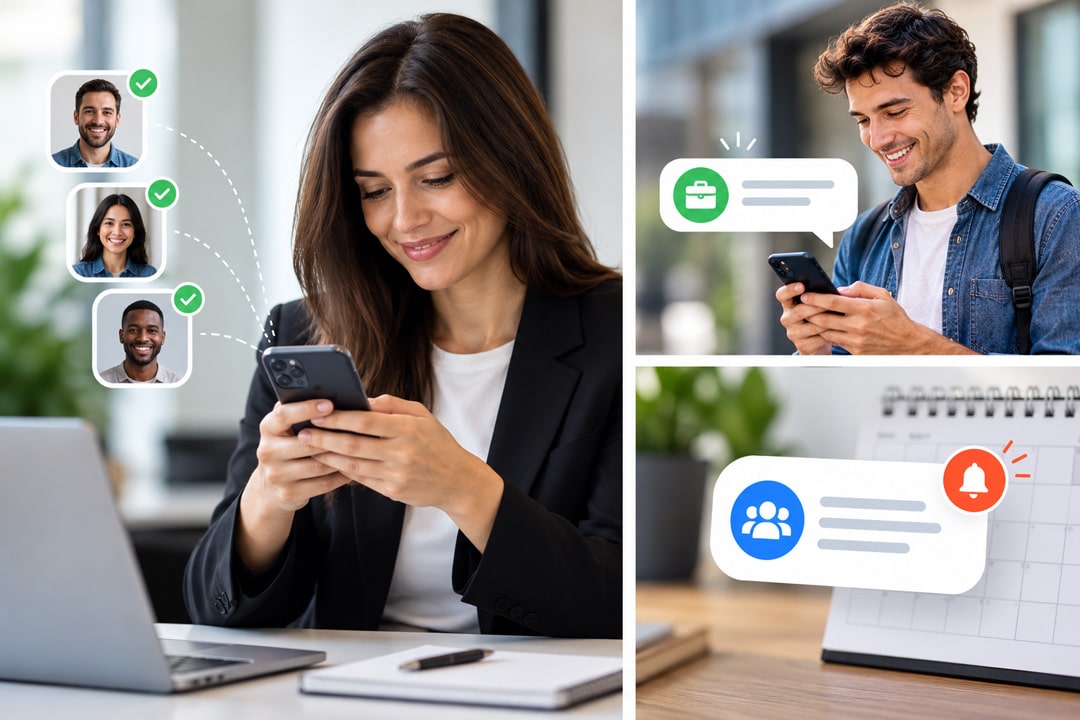
SMS automation helps businesses communicate at the exact moment customers need information, reassurance, or a timely nudge. Unlike one-off text campaigns, automated flows respond to specific actions, dates, and customer behaviors. As a result, each message feels more relevant and requires less manual work.
However, successful SMS automation involves more than scheduling texts. Businesses need clear triggers, accurate customer data, thoughtful timing, and proper consent management. Automated messages work best when they complement email, customer support, and CRM activity rather than operate in isolation.
Here are 15 SMS automation flows that businesses across ecommerce, services, hospitality, healthcare, education, and other industries should consider.
1. New Subscriber Welcome Flow
A welcome flow should greet new subscribers immediately after they join your SMS list. Start by confirming their subscription, identifying your business, and delivering any promised incentive.
Then, consider sending a second message that introduces your most popular service, product category, or customer resource. Because the subscriber has just expressed interest, this flow often creates an ideal opportunity to encourage a first action.
2. Lead Follow-Up Flow
When a potential customer completes a form, requests a quote, or downloads a resource, trigger a brief follow-up text. For example, you might confirm the request and explain what happens next.
Additionally, give leads a simple way to reply with questions. A fast, conversational response can reduce uncertainty and help your sales team connect with prospects while their interest remains high.
3. Appointment Confirmation Flow
Appointment confirmations can dramatically reduce confusion for service-based businesses. Send the date, time, location, and relevant preparation instructions immediately after someone books.
Moreover, include clear options to confirm, cancel, or reschedule. This approach makes the process easier for customers while helping your team protect valuable appointment slots.
4. Appointment Reminder Flow
A reminder flow can send one message several days before an appointment and another closer to the scheduled time. However, avoid excessive reminders that could irritate recipients.
Instead, adjust timing based on the appointment type. A medical consultation may require more advance notice, while a restaurant reservation may only need a same-day reminder.
5. Abandoned Cart Flow
An abandoned cart flow targets shoppers who add products to their carts but leave before buying. The first message should serve as a helpful reminder rather than an aggressive sales pitch.
Afterward, you can send a second message featuring customer support, product information, or a limited incentive. Behavioral triggers make these texts more contextual than broad promotional campaigns. Shopify notes that automation tools can send triggered messages based on customer actions, helping businesses reach people at more relevant moments.
6. Browse Abandonment Flow
Not every interested shopper adds an item to their cart. Therefore, a browse abandonment flow can re-engage subscribers who repeatedly view a product or service without taking the next step.
For better results, focus on high-intent behavior. A single page visit may not justify a text, but several visits within a short period could signal genuine interest.
7. Order Confirmation Flow
Customers expect immediate reassurance after completing a purchase. An automated order confirmation should include the order number, a concise summary, and a link to view details.
However, do not overload the message with unnecessary promotional content. At this stage, clarity and trust matter more than another sales offer.
8. Shipping and Delivery Update Flow
Proactive delivery updates can reduce support requests such as “Where is my order?” Send messages when the order ships, encounters a delay, goes out for delivery, and arrives.
Furthermore, connect the flow to real-time logistics data whenever possible. Accurate updates build confidence, while outdated notifications create frustration.
9. Post-Purchase Education Flow
After a purchase, customers may need help using, installing, maintaining, or preparing the product. A post-purchase education flow can deliver instructions, videos, frequently asked questions, or safety guidance.
Consequently, customers may experience value sooner and contact support less often. The flow also gives your business an opportunity to demonstrate expertise without immediately pushing another sale.

10. Review Request Flow
A review request should arrive after the customer has had enough time to evaluate the experience. For instance, a restaurant might request feedback the next day, while a skincare brand may wait several weeks.
Additionally, make the process simple by linking directly to the correct review page. If the experience was negative, route the customer toward support so your team can address the problem.
11. Replenishment Reminder Flow
Businesses that sell consumable or repeat-purchase products can estimate when customers may need replacements. Examples include pet food, beauty products, office supplies, filters, and maintenance services.
Instead of sending every customer the same reminder, use purchase history and typical usage cycles. As a result, the message arrives when the customer genuinely needs it.
12. Subscription Management Flow
Subscription businesses can automate renewal reminders, payment failure alerts, upcoming shipment notices, and cancellation confirmations.
More importantly, let customers take simple actions through a link or text reply. For example, they might skip a shipment, update payment details, or change delivery timing without contacting support.
13. Customer Support Triage Flow
An automated support flow can acknowledge incoming requests, gather essential information, and direct customers to the right team.
Nevertheless, automation should not trap customers in an endless sequence of scripted responses. Provide a clear path to a human agent, especially for billing problems, complaints, emergencies, or complex requests. Two-way messaging and integrated customer data can help support teams respond with more context.
14. Loyalty and VIP Flow
Use loyalty automation to celebrate milestones such as points earned, tier upgrades, birthdays, anniversaries, and repeat purchases.
Similarly, VIP customers can receive early access to launches, private booking opportunities, or limited inventory. Because these messages recognize an established relationship, they often feel more personal than general promotions.
15. Win-Back Flow
A win-back flow targets customers who have not purchased, booked, logged in, or engaged for a defined period.
First, remind them of the value they previously received. Next, highlight something new, such as an updated service or fresh product collection. Finally, consider a carefully timed incentive, but avoid training customers to wait for discounts.

Building SMS Flows Responsibly
Before launching any automation, obtain the consent required for your message type and operating region. Store evidence of consent, honor opt-out requests, and treat unsubscribed numbers as unavailable for future marketing. Twilio recommends maintaining opt-in and opt-out records, while FCC guidance confirms that automated commercial texts generally fall under TCPA requirements.
In addition, identify your business in messages, explain subscription terms clearly, and support standard opt-out instructions such as replying “STOP.” For US application-to-person messaging over 10-digit long-code numbers, businesses should also review A2P 10DLC registration requirements.
Ultimately, the strongest SMS automation strategy does not send the most messages. Instead, it sends useful messages at moments when customers expect or appreciate them. Start with two or three high-impact flows, measure conversions and opt-outs, and refine each sequence before expanding.