Traditional SMS marketing often follows a one-way model: a business sends a promotion, and the customer clicks a link or ignores it. Two-way SMS marketing changes that relationship. Instead of treating text messages as miniature advertisements, it allows customers to ask questions, request help, share preferences, and receive direct responses.
As a result, SMS becomes a conversational channel rather than another broadcast tool. Customers can get answers without opening a new app, waiting on hold, or writing a formal email. Meanwhile, businesses can remove purchase barriers, learn what customers need, and build stronger relationships.
However, two-way texting requires more than allowing replies. Businesses need clear workflows, trained agents, useful automation, and strong consent practices. When these elements work together, conversations can increase both immediate sales and long-term loyalty.
What Is Two-Way SMS Marketing?
Two-way SMS marketing allows a business and a customer to exchange text messages. The conversation may begin with a promotional campaign, an automated reminder, a support request, or a customer-initiated question.
For example, a retailer might send: “Need help choosing the right size? Reply with your height and preferred fit.”
A customer can then respond directly, and either an agent or an automated system can continue the conversation.
Unlike one-way alerts, two-way SMS supports replies and follow-up questions. Modern messaging systems can receive and route incoming texts, trigger automated responses, and transfer complex conversations to staff members.
One-Way SMS vs. Two-Way SMS
| One-Way SMS | Two-Way SMS |
|---|---|
| Broadcasts information | Starts or continues conversations |
| Focuses on clicks | Encourages clicks, replies, and questions |
| Offers limited customer feedback | Reveals customer needs and objections |
| Works well for simple alerts | Works well for sales and support |
| Often ends after one message | Can continue until the issue is resolved |
Both approaches have value. However, two-way messaging becomes especially powerful when customers need reassurance or assistance before taking action.
How Conversations Can Increase Sales
Many customers abandon purchases because they have unanswered questions. They may feel unsure about size, availability, delivery times, compatibility, pricing, or return policies.
Therefore, giving customers a simple way to reply can remove these barriers before interest disappears.
Consider an abandoned-cart message: “Still interested in the coffee machine in your cart? Reply with any questions, or complete your order here: [link]”
The customer might ask whether the machine includes a warranty. Once the business answers, the customer has one less reason to delay the purchase.
Similarly, service providers can use two-way SMS to qualify leads. A moving company might ask about the moving date, property size, and destination before preparing a quote. Consequently, the sales team receives better information and can respond with a more relevant offer.
Conversational SMS can also guide product discovery. Automated or agent-led conversations may answer common questions, recommend products, and help customers move toward a purchase in real time.
Use Two-Way SMS for Product Recommendations
Customers often want guidance rather than another discount. Therefore, businesses can use short conversations to understand preferences and recommend suitable options.
For example:
Business: “Looking for a gift? Reply 1 for under $25, 2 for under $50, or 3 for premium options.”
Customer: “2”
Business: “Great. Is it for a coffee lover, home cook, or traveler?”
This interaction narrows the options without forcing the customer to search through an entire website. Moreover, the recommendation feels more personal because it reflects information the customer willingly shared.
However, businesses should keep the process simple. Too many questions can turn a helpful conversation into a long questionnaire.
Turn Customer Service Into a Loyalty Tool
Two-way SMS also improves customer support. Customers can ask about an order, update an appointment, report a problem, or request assistance through a familiar channel.
For example, a delivery message might say: “Your order arrives today. Need to update the delivery instructions? Reply to this text.”
This option creates convenience and gives the business a chance to solve problems before they become complaints.
Additionally, fast support can strengthen loyalty. When customers receive a useful answer without changing channels, they may view the business as easier to work with. Klaviyo notes that forcing customers to switch from SMS to email for an answer can create unnecessary frustration.
Nevertheless, businesses should not disguise sales pitches as support. If a customer asks about a refund, the priority should remain resolving the issue rather than recommending another product.
Combine Automation With Human Support
Automation helps businesses respond quickly, especially outside standard working hours. It can answer basic questions, confirm receipt of a message, collect order numbers, or provide links to common resources.
For instance: “Thanks for contacting us. Reply with your order number so we can check the status.”
However, automation should recognize its limits. Complex complaints, sensitive account issues, unusual requests, and frustrated customers often require a human response.
A Practical Workflow Might Include:
- An automated message acknowledges the reply.
- The system identifies the topic or asks one basic question.
- Common questions receive an immediate answer.
- Complex conversations move to an agent.
- The agent sees the customer’s previous messages and relevant history.
Therefore, automation should support the conversation rather than trap customers inside rigid menus.

Create Clear Response Expectations
Customers need to know whether someone will answer their message. Otherwise, “Reply with questions” can create disappointment when no response arrives.
Businesses should clearly communicate:
- Support hours
- Expected response times
- Whether automation may answer first
- How customers can reach urgent support
- What topics the SMS channel handles
For example: “Reply with questions. Our team responds Monday–Friday, 9 a.m.–6 p.m.”
Additionally, teams should assign ownership. Sales, support, and operations staff need clear rules for routing and responding to messages. Without those rules, conversations may remain unanswered or receive inconsistent information.
Use Conversations to Collect Better Customer Data
Two-way SMS can reveal information that click data alone cannot provide. Customers may explain why they did not purchase, which product they want, or what problem they need to solve.
Moreover, businesses can ask brief preference questions:
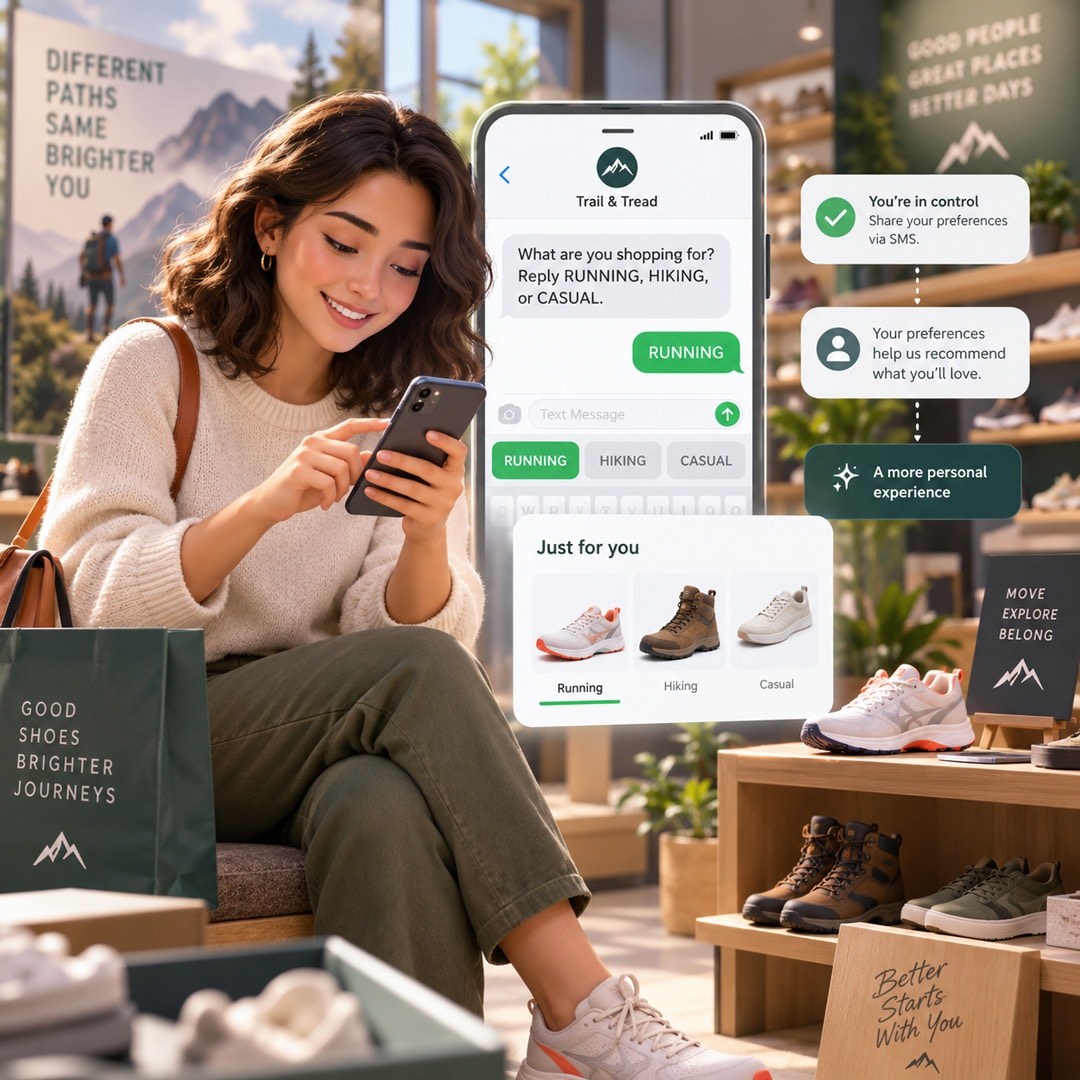
“Would you rather receive new-product alerts or weekly discounts? Reply NEW or DEALS.”
The answer can update the customer’s profile and improve future segmentation. Consequently, the business can send fewer irrelevant messages.
However, companies should collect only information that supports a clear customer benefit. Asking for unnecessary personal details can make the interaction uncomfortable and weaken trust.
Measure More Than Clicks
Two-way SMS requires different performance metrics from one-way campaigns. Click-through rates still matter, but they do not show the complete value of a conversation.
Instead, businesses should track:
- Response rate
- Average response time
- Conversations that lead to sales
- Support issues resolved by SMS
- Appointment confirmations and reschedules
- Customer satisfaction
- Opt-out rate
- Repeat purchases after conversations
Additionally, teams should review conversation themes. Repeated questions about sizing, shipping, or product compatibility may reveal weaknesses elsewhere in the customer journey.
Protect Consent and Customer Trust
Businesses should obtain the appropriate consent before sending marketing texts. They should also identify themselves clearly, explain the program, and provide a straightforward opt-out method.
CTIA’s messaging principles emphasize consumer consent and the ability to stop future messages. Meanwhile, FCC rules protect consumers’ right to revoke consent through reasonable methods and require businesses to process qualifying requests within the applicable timeframe.
Businesses should also distinguish normal conversation from consent. A customer who texts a question does not automatically agree to receive ongoing promotional campaigns.
Make Every Conversation Useful
Two-way SMS works because it reduces distance between customer interest and business support. Instead of asking people to search for answers, change channels, or wait for a callback, it gives them a direct path to assistance.
However, the strongest programs do not automate every reply or push a sale in every conversation. Instead, they respond quickly, respect context, and focus on solving the customer’s immediate need.
When businesses combine useful automation, skilled human support, clear expectations, and responsible data practices, SMS conversations can remove buying barriers and create memorable service. Consequently, two-way messaging can increase conversions today while building the trust that encourages customers to return tomorrow.