Businesses often need to communicate with hundreds or thousands of customers at once. Email can handle large audiences, but important messages may remain unread for hours or days. Social media also provides reach, although algorithms determine who actually sees each post.
Bulk SMS offers a more direct option.
A bulk SMS service allows businesses to send text messages to large contact lists through a centralized messaging platform. Companies can use it for promotions, appointment reminders, delivery updates, event notifications, payment reminders, emergency alerts, and other time-sensitive communication.
However, successful bulk texting involves more than uploading a list and clicking Send. Businesses need proper consent, audience segmentation, suitable sender types, clear messages, and a reliable platform.
Understanding how bulk SMS works, what it costs, and how to use it responsibly can help companies build a more effective messaging strategy.
What Is a Bulk SMS Service?
A bulk SMS service is a platform that lets a business send SMS messages to many recipients simultaneously or through automated workflows.
Instead of employees texting customers individually, the business uploads or synchronizes its contact database with an SMS platform. Then, users can create campaigns, select recipients, schedule messages, and monitor results from one dashboard.
Many platforms also support personalization, two-way messaging, contact segmentation, automated opt-outs, APIs, templates, and delivery reporting.
Businesses Commonly Use Bulk Sms For:
- Promotional campaigns and limited-time offers
- Appointment and reservation reminders
- Order and delivery notifications
- Customer account alerts
- Event announcements
- Payment reminders
- Staffing and employee updates
- Surveys and feedback requests
Therefore, bulk SMS can support both marketing and operational communication.

How Does Bulk SMS Work?
Although the user experience may look simple, several steps happen between creating a campaign and delivering the message.
First, the business collects mobile numbers from customers who have agreed to receive relevant text messages. The company then stores those contacts in an SMS platform, CRM, or integrated system.
Next, the sender creates a message and chooses the appropriate audience.
After the campaign launches, the SMS provider routes each message through telecommunications networks to the recipient’s mobile carrier. The carrier then attempts to deliver the text to the recipient’s phone.
Meanwhile, the messaging platform records delivery information so the sender can track successful and failed messages.
Bulk SMS Can Also Be Automated
Businesses don’t need to send every message manually.
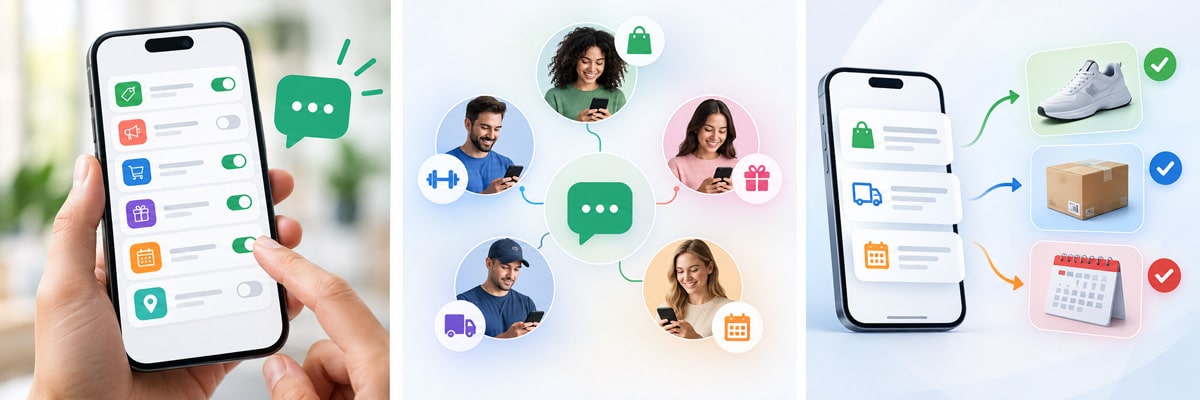
For example, an e-commerce company can trigger a text automatically when an order ships. Similarly, a healthcare practice can send appointment reminders 24 hours before scheduled visits.
A company can also connect an SMS API with its website, CRM, booking system, help desk, or internal software.
As a result, bulk SMS can handle both scheduled marketing campaigns and event-driven transactional messages.
How Much Does Bulk SMS Cost?
Bulk SMS pricing varies widely by provider, country, carrier, sender type, and message volume.
Therefore, businesses should avoid comparing platforms based only on an advertised price per text.
The Total Cost May Include Several Components:
| Cost Component | What It Covers |
|---|---|
| Message charges | Cost for each SMS segment sent |
| Carrier fees | Additional charges imposed by mobile carriers |
| Phone number fees | Monthly cost for long codes, toll-free numbers, or other senders |
| Registration fees | Charges related to programs such as U.S. A2P 10DLC |
| Platform fees | Monthly software or account subscription |
| Optional features | Analytics, automation, link tracking, additional users, or integrations |
Some providers charge only for usage, while others offer monthly packages containing a fixed number of messages.
High-volume businesses may also qualify for lower per-message rates.
SMS Segments Can Affect Your Costs
One detail businesses often overlook is SMS segmentation.
A standard GSM-7 SMS can contain up to 160 characters as a single segment. However, longer texts usually split into multiple segments, with each segment carrying fewer characters because some space is reserved for reassembly information.
Unicode characters can make an even bigger difference. Emojis, some accented characters, non-Latin scripts, and certain smart punctuation can switch a message to Unicode encoding, reducing the single-segment limit to 70 characters.
As a result, what appears to the customer as one long text may generate charges for several SMS segments.
For example, suppose a provider charges $0.01 per segment and a business sends one segment to 50,000 contacts. The base message cost would be approximately $500 before carrier, platform, number, or registration fees.
However, if the message requires two segments, that base cost could approximately double.
Therefore, businesses sending high volumes should monitor both character count and encoding.
Choose the Right Sender Type
Businesses can send bulk SMS through different types of numbers or sender identities.
In the United States, common options include 10-digit long code numbers, toll-free numbers, and short codes.
A2P 10DLC allows businesses to use standard 10-digit numbers for registered application-to-person messaging. Meanwhile, toll-free numbers can support nationwide business communication after the appropriate verification process.
Short codes provide another option for high-volume messaging. However, they typically involve different approval processes and costs.
Outside the United States, businesses may also use alphanumeric sender IDs where supported.
Therefore, companies should choose a sender type based on message volume, use case, geography, and whether two-way communication matters.
Segment Your Audience Instead of Sending Everything to Everyone
Bulk SMS does not mean every subscriber should receive every message.
In fact, segmentation can make campaigns more relevant.
An ee-commercebusiness could segment customers based on previous purchases. Likewise, a fitness center might separate prospects, current members, and former members.
Businesses Can Segment Contacts According To:
- Location
- Purchase history
- Customer status
- Interests
- Previous engagement
- Service type
- Appointment status
As a result, recipients receive messages that better match their needs.
Better targeting can also reduce unnecessary message costs and lower the risk of opt-outs.
Keep Bulk SMS Messages Short and Action-Oriented
SMS works best when recipients understand the message immediately.
Therefore, each text should have one primary purpose.
Instead of adding several offers or instructions, tell recipients what matters and what they should do next.
For example:
“ABC Fitness: Get 20% off personal training packages through Friday. View available plans: [link]. Reply STOP to unsubscribe.”
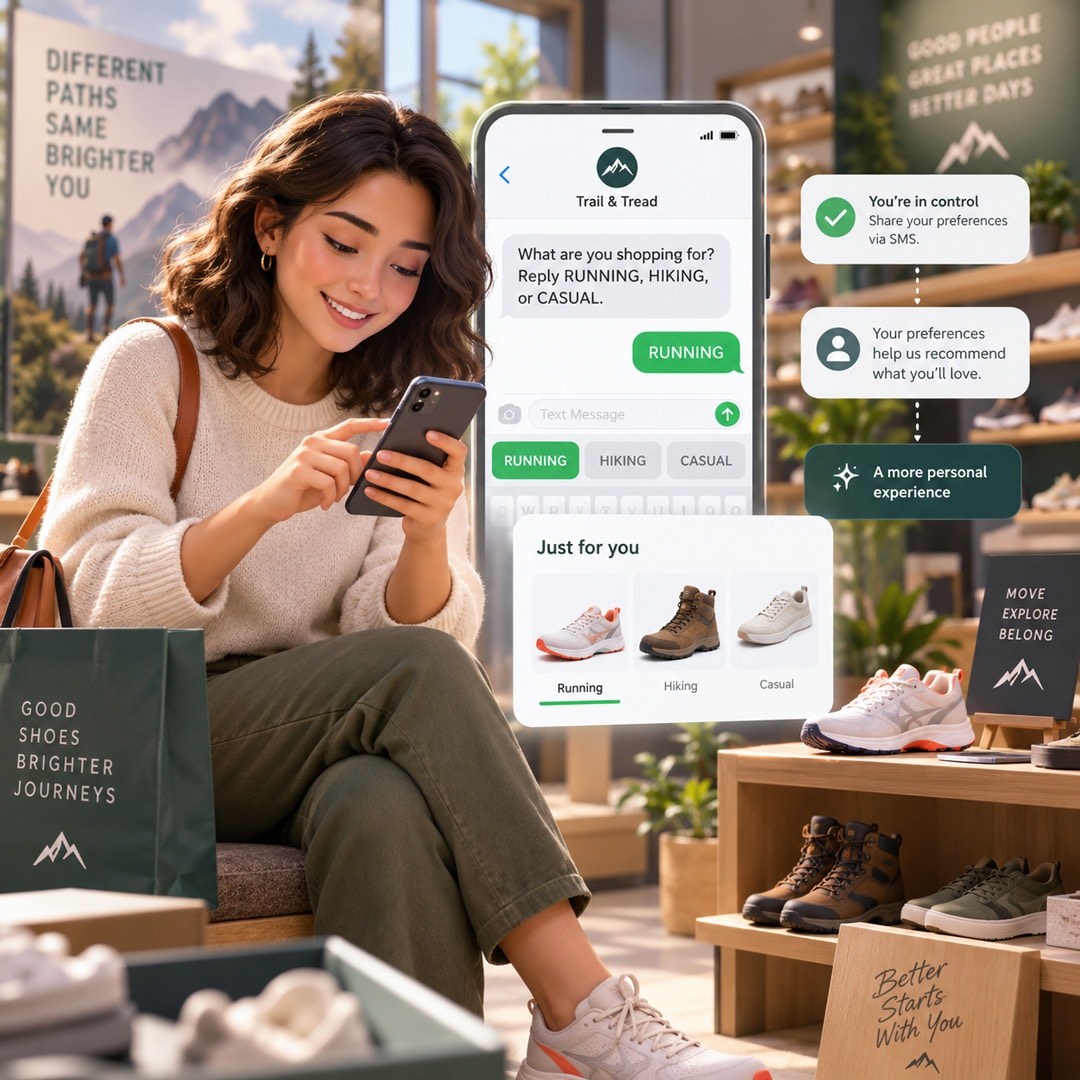
The message identifies the sender, explains the offer, provides a clear next step, and includes an opt-out method.
Short messages can also reduce segment usage and control campaign costs.

Get Permission Before Sending Bulk SMS
Consent is one of the most important parts of business text messaging.
Companies should not purchase random mobile-number databases and begin sending promotional texts. Instead, they should build lists from people who knowingly agreed to receive relevant messages.
Current industry guidance emphasizes that businesses should obtain appropriate consent before sending messages. U.S. messaging best practices generally require clear written consent for marketing SMS.
Additionally, businesses should explain who will send messages, what recipients are signing up for, and how they can withdraw consent.
A reliable SMS platform should also record consent and automatically process standard opt-out requests.
For example, recipients should be able to reply STOP to unsubscribe from recurring messages.
Consequently, compliance should be part of the campaign workflow from the start, not an afterthought.
Monitor Delivery and Campaign Performance
Sending a campaign is only the first step.
Businesses should review what happens afterward.
A good bulk SMS platform can provide data about messages sent, deliveries, failures, replies, opt-outs, and other useful events. Marketing platforms may also provide link-click tracking and campaign analytics.
If delivery rates decline, investigate the cause. Invalid numbers, carrier filtering, incorrect formatting, or poor list quality may contribute to failures.
Additionally, monitor opt-out patterns. A sudden increase in unsubscribes may indicate that messages arrive too frequently or lack relevance.
Therefore, analytics can help businesses continuously improve their campaigns.
Bulk SMS Best Practices
A successful bulk SMS program focuses on quality rather than sending as many messages as possible.
Businesses should:
- Send only to contacts with appropriate consent.
- Clearly identify the business.
- Keep messages concise.
- Provide a clear next action.
- Segment audiences whenever practical.
- Avoid excessive messaging frequency.
- Send campaigns at reasonable times.
- Process opt-outs immediately.
- Monitor message segments and costs.
- Track delivery results and engagement.
Most importantly, businesses should treat access to a customer’s phone number as permission to provide relevant communication—not permission to send unlimited promotions.

Final Thoughts
Bulk SMS gives businesses a scalable way to communicate with large audiences through a direct mobile channel.
Companies can use it for promotions, reminders, notifications, customer updates, and automated messages. Integrations and APIs can also connect SMS with existing business systems and trigger messages at key moments.
However, businesses should understand the full cost structure. Message segments, carrier fees, number charges, registration costs, and software subscriptions can all influence the final price.
Likewise, successful bulk messaging requires consent, segmentation, appropriate frequency, and clear messages.
When businesses combine those practices with automation and accurate reporting, bulk SMS can become a powerful communication tool without becoming another source of unwanted messages.