Growing an SMS list may seem simple: offer a discount, collect phone numbers, and start sending promotions. However, a large list does not automatically create strong sales. If subscribers joined only for a one-time coupon, misunderstood the offer, or rarely engage with the brand, list size can become a misleading success metric.
High-quality subscribers behave differently. They understand what they signed up for, value the messages, and show genuine interest in the company’s products or services. Therefore, an effective list-growth strategy should prioritize relevance and consent rather than raw numbers.
When businesses attract the right subscribers, they can improve conversions, reduce opt-outs, control messaging costs, and build a healthier long-term marketing channel.
Define a High-Quality SMS Subscriber
A high-quality subscriber is not simply someone with a valid mobile number. Instead, that person has knowingly requested messages and has a realistic reason to remain engaged.
Strong Subscribers Often:
- Recognize the business sending the texts
- Understand what type of content they will receive
- Match the company’s target audience
- Engage with relevant offers or updates
- Provide accurate preference information
- Remain subscribed after the initial incentive
- Purchase, book, reply, or take another valuable action
Consequently, marketers should evaluate list growth through engagement, conversion, and retention—not just new sign-ups.
Make the Value of Joining Specific
“Sign up for texts” does not give customers a compelling reason to share a personal communication channel. Therefore, the opt-in invitation should explain exactly what subscribers will gain.
A fashion retailer might offer early access to limited collections. Meanwhile, a service business could provide appointment openings, maintenance reminders, or last-minute availability.
Useful SMS Benefits Include:
- Early access to launches
- Back-in-stock notifications
- Subscriber-only offers
- Local event announcements
- Appointment reminders
- Useful tips or educational content
- Loyalty rewards
- Order and delivery updates
Specific benefits attract people who genuinely want the program. In contrast, vague promises may generate weaker intent and faster opt-outs.
Use Discounts Carefully
An immediate discount can accelerate list growth. However, it can also attract customers who subscribe, redeem the offer, and leave.
Therefore, businesses should connect the incentive to long-term value. For example, the confirmation page could explain that subscribers will also receive restock alerts, early access, or loyalty benefits.
Marketers can also test alternatives to percentage discounts, such as:
- Free shipping
- A complimentary consultation
- A downloadable guide
- Priority booking
- A free product sample
- Entry into a relevant giveaway
- Bonus loyalty points
These incentives may attract fewer people initially. Nevertheless, they can produce subscribers with stronger interest in the brand itself.
Place Opt-In Forms at High-Intent Moments
Not every website visitor has the same level of interest. Consequently, businesses should place SMS invitations where customers already demonstrate intent.
High-Intent Placements Include:
| Placement | Why It Works |
|---|---|
| Product pages | Visitors already show category interest |
| Cart pages | Shoppers may want price or stock updates |
| Checkout | Buyers already trust the business |
| Account registration | Customers expect ongoing communication |
| Booking confirmation | Clients may value reminders and updates |
| Loyalty enrollment | Members have a reason to stay engaged |
| In-store checkout | Staff can explain the program directly |
However, businesses should avoid interrupting every new visitor with an immediate full-screen request. A customer who has not explored the website may not yet understand the brand or the benefits of subscribing.
Instead, trigger an invitation after meaningful engagement, such as viewing several products, spending time on the site, or adding an item to the cart.
Create Campaign-Specific Landing Pages
A dedicated SMS sign-up page gives businesses more room to explain the value of joining. It also helps marketers match the invitation to the traffic source.
For example, a social media campaign aimed at runners could promote restock alerts and offers for running products. Meanwhile, an in-store QR code could lead to a page featuring local promotions and event updates.
Additionally, campaign-specific pages make measurement easier. Marketers can compare sign-up volume, subsequent engagement, and customer value across traffic sources.
As a result, they can identify which campaigns attract valuable subscribers rather than simply generating the cheapest leads.

Promote SMS Through Existing Channels
Businesses often already have engaged audiences on email, social media, websites, apps, and physical locations. Therefore, those channels can support SMS list growth.
Consider Promoting the Program Through:
- Email newsletters
- Social media profiles and posts
- Website banners
- Printed receipts and packaging
- Store signage
- Event displays
- Customer-service conversations
- Loyalty program dashboards
- QR codes on menus or brochures
However, email subscribers should not automatically be added to an SMS marketing list. Permission for one channel does not necessarily provide permission for another. The SMS invitation should ask customers to enroll separately and clearly explain the texting program.
Let Subscribers Choose Their Interests
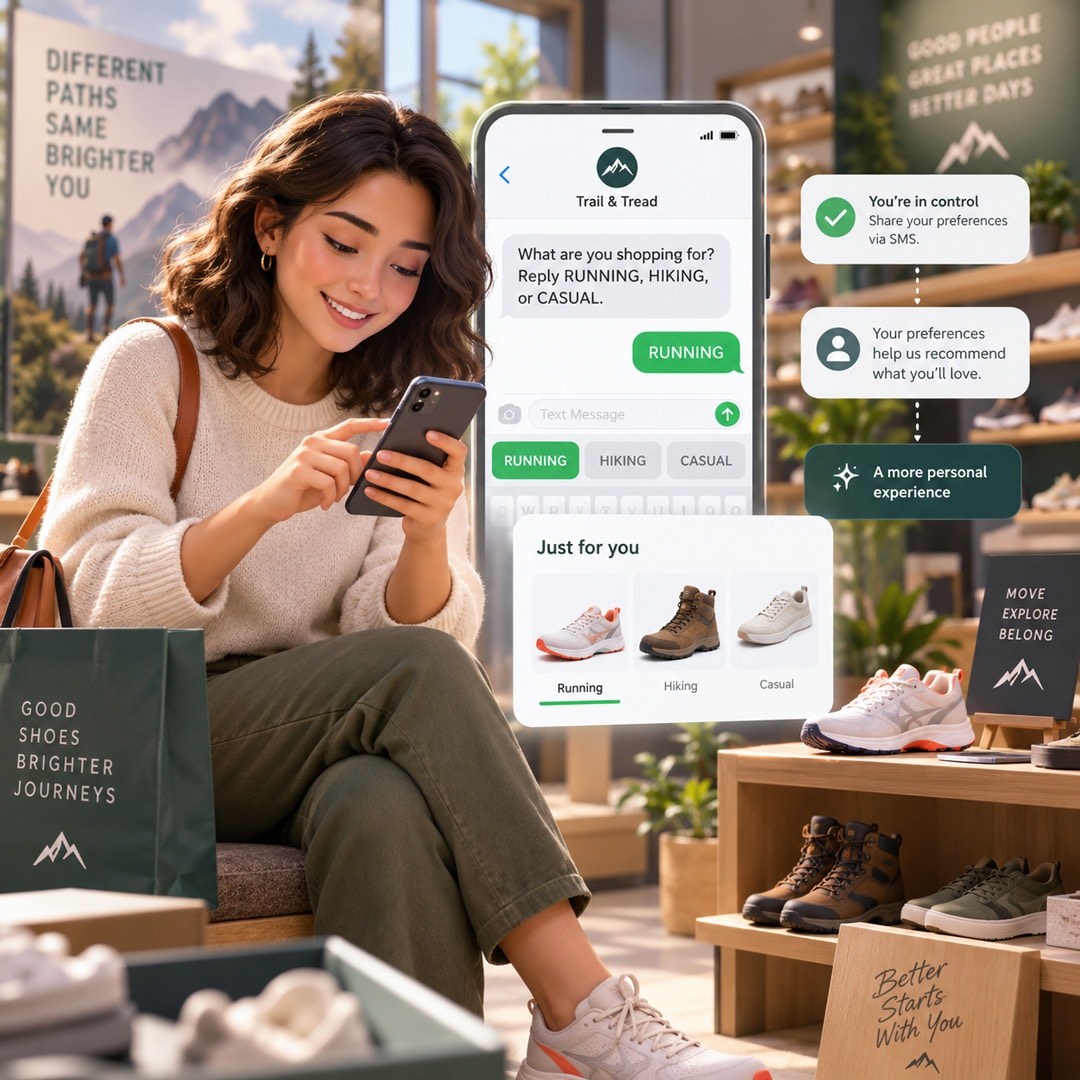
Preference collection can improve list quality from the beginning. Instead of treating every subscriber identically, ask what they want to receive.
For example: “Which texts would you like? Reply 1 for offers, 2 for new arrivals, or 3 for local events.”
This information helps businesses create useful segments immediately. Moreover, it shows customers that the program will reflect their interests.
Keep the initial question simple, though. A long preference form may discourage sign-ups. Therefore, collect one or two essential preferences first and gradually learn more through clicks, purchases, and replies.
Use Keywords and QR Codes With Clear Context
Text-to-join keywords and QR codes work well in physical stores, at events, on packaging, and in traditional advertising. However, the surrounding call to action must explain what happens after someone joins.
Avoid displaying only: “Text JOIN to 12345.”
Instead, provide useful context: “Text JOIN to 12345 for weekly offers and early access. Message frequency varies. Terms apply.”
Clear calls to action support informed consent and help customers understand the program before subscribing. CTIA’s messaging principles emphasize obtaining appropriate consumer consent and offering a way to stop future messages.
Consider Double Opt-In
With double opt-in, a customer first submits a number and then confirms the subscription through a follow-up action. This additional step may reduce total sign-ups, but it can verify stronger interest and limit accidental or incorrect entries.
For example: “Reply YES to confirm that you want weekly offers from North Street Market.”
Double opt-in can also reduce confusion when a customer enters the wrong number or forgets to complete a form. Furthermore, the confirmation creates a clear point in the subscription journey that businesses can document.
Set Expectations in the First Message
The welcome message should immediately confirm the program and reinforce the value of joining.
Include:
- The business name
- The promised benefit
- Expected message frequency
- A link to relevant terms
- Clear opt-out instructions
For example:
“Welcome to Oak & Lane alerts. You’ll receive new-arrival updates and up to 4 promotional texts monthly. Reply STOP to opt out.”
The first message shapes the customer’s expectations. Therefore, it should not surprise subscribers with a higher frequency or different content than the original sign-up form promised.
Buying a list may produce rapid growth on paper, but those contacts did not directly request messages from the business. Consequently, they may ignore the texts, complain, or opt out immediately.
Businesses should also avoid importing phone numbers collected for unrelated purposes without the required permission. A customer who provided a number for delivery coordination may not expect promotional messages.
Consent should remain connected to the specific brand, purpose, and message type. FCC rules restrict automated marketing texts without the appropriate consent and protect consumers’ ability to revoke that consent.
Measure Subscriber Quality After Sign-Up
The acquisition campaign does not end when someone joins. Businesses should track how subscribers behave over the following weeks and months.
Useful Metrics Include:
- Welcome-offer redemption
- Click and reply rates
- First-purchase conversion
- Revenue per subscriber
- Time to first purchase
- Opt-out rate
- Repeat purchase rate
- Engagement after 30, 60, and 90 days
Additionally, compare these metrics by acquisition source. A website popup may produce more subscribers, while a loyalty-program invitation may attract fewer but more valuable customers.

Keep the List Healthy
Over time, some numbers become inactive, some customers lose interest, and others stop engaging. Therefore, businesses should regularly review delivery failures, extended inactivity, and opt-out records.
Before reducing activity, a brand might send a preference-update or re-engagement message. However, if a subscriber remains unresponsive, sending fewer texts may protect both the customer experience and the marketing budget.
Ultimately, sustainable SMS growth comes from trust and relevance. Businesses should make the program valuable, collect clear permission, target high-intent moments, and measure what subscribers do after joining.
A smaller list of interested customers will often outperform a larger list built through vague promises or aggressive incentives. Therefore, the best growth strategy is not to collect every available phone number. It is to attract people who genuinely want the next message.