
Summer creates valuable marketing opportunities for retailers, restaurants, travel companies, service providers, and event organizers. Customers often plan vacations, attend outdoor events, refresh their wardrobes, and spend more time away from home. Therefore, businesses need calls to action that match the season’s fast-moving buying behavior.
A strong summer CTA tells subscribers exactly what to do next. It may encourage them to shop a limited collection, reserve an appointment, claim a seasonal offer, or attend a local event. However, generic phrases such as “Click here” or “Learn more” often fail to communicate enough value.
Instead, businesses should use direct, specific, and timely language. The following five summer CTAs can help brands improve clicks, bookings, and conversions without overwhelming subscribers.
What Makes a Summer SMS CTA Effective?
SMS gives marketers limited space, so every word must support the campaign goal. A successful CTA should communicate one clear action while matching the offer, audience, and deadline.
Effective summer CTAs usually include:
- A strong action verb
- One obvious next step
- A genuine reason to act now
- A mobile-friendly link
- Clear offer conditions
- Seasonal relevance
- A recognizable sender
For example, “Shop summer styles” feels more specific than “Visit our website.” Likewise, “Reserve your patio table” creates a clearer next step than “See availability.”
However, urgency should remain truthful. Businesses should not use fake deadlines, false stock warnings, or repeated “last chance” claims. Customers may respond once, but misleading pressure can quickly weaken trust.
1. Shop the Summer Collection
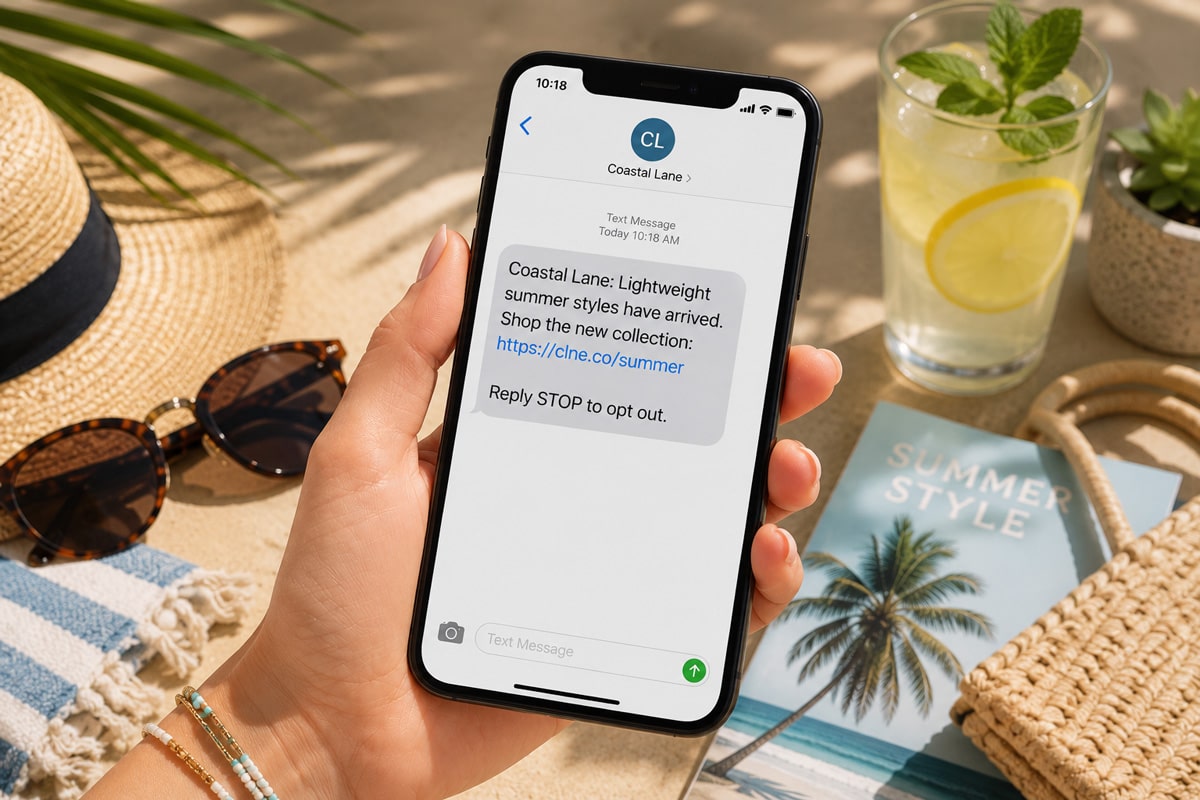
“Shop the summer collection” works well for fashion, beauty, homeware, sporting goods, and lifestyle brands. It directs customers toward a seasonal product category rather than an unfocused homepage.
For example:
“Coastal Lane: Lightweight summer styles have arrived. Shop the new collection: [link]. Reply STOP to opt out.”
This CTA becomes stronger when the landing page reflects the message. Customers should immediately see summer products, seasonal images, and relevant categories after clicking.
Brands Can Also Adapt the Wording for Specific Audiences:
- Shop summer dresses
- Explore beach essentials
- Find your vacation look
- Shop outdoor dining
- Discover warm-weather skincare
- Browse summer sports gear
Moreover, retailers can segment subscribers according to previous purchases or browsing activity. A customer who regularly buys running products may respond better to “Shop summer running gear” than a general seasonal collection.
Nevertheless, businesses should avoid listing several categories in one text. One clear destination usually creates a smoother customer journey.
2. Claim Your Summer Offer
“Claim your summer offer” combines a direct action with a clear benefit. Therefore, it can support discounts, free shipping, loyalty rewards, service packages, and limited seasonal bonuses.
A retailer might send:
“North Market: Claim 15% off summer essentials through Sunday. Use code SUMMER15: [link].”
Meanwhile, a service business could write:
“Fresh Air HVAC: Claim your summer maintenance offer before temperatures rise. Book here: [link].”
This CTA works because the word “claim” suggests that the offer already belongs to the subscriber. However, the text should still explain the value and any important conditions.
Common Variations Include:
- Claim your discount
- Unlock your summer reward
- Get free summer shipping
- Redeem your seasonal bonus
- Use your member offer
- Activate your vacation deal
Businesses should also calculate the real cost of each promotion. A discount may increase conversion rates, but it can also reduce profit. Therefore, brands should test different incentives rather than assuming the largest discount will produce the best result.
3. Reserve Your Spot
Summer often brings limited-capacity events, classes, appointments, tours, restaurant seating, and travel experiences. Consequently, “Reserve your spot” can create natural urgency without relying on a price reduction.
For example:
“Sunset Yoga: Our Saturday rooftop class has 8 spaces left. Reserve your spot: [link].”
A restaurant might send:
“Harbor Grill: Summer patio reservations are open. Reserve your table for this weekend: [link].”
The phrase works especially well when availability genuinely remains limited. Moreover, it clearly tells customers that they need to secure access rather than simply view information.
Suitable Campaigns Include:
| Business Type | CTA Example |
|---|---|
| Restaurant | Reserve your patio table |
| Fitness studio | Book your outdoor class |
| Hotel | Reserve your summer stay |
| Event organizer | Save your seat |
| Salon | Book your pre-vacation appointment |
| Tour operator | Secure your tour time |
However, the booking page should display current availability. If customers click a message promising open spaces and find no suitable options, the campaign may create frustration instead of conversions.
4. Get It Before the Weekend
Summer purchasing often follows the weekly calendar. Customers prepare for trips, parties, outdoor activities, and family gatherings before the weekend begins. Therefore, “Get it before the weekend” connects a product with a practical deadline.
An ecommerce business might write:
“Weekend plans? Order your picnic essentials by 2 p.m. for Friday delivery: [link].”
Similarly, a local retailer could send:
“Get your pool supplies before the weekend. Order online and collect today: [link].”
This CTA works best when the business can support the promised delivery or pickup schedule. Consequently, marketers should coordinate the campaign with inventory, fulfillment, and store operations.
Useful Variations Include:
- Order for weekend delivery
- Pick up before Friday
- Get ready for the weekend
- Shop before your trip
- Order before the holiday
- Collect your summer essentials today
Additionally, geographic segmentation can improve relevance. Customers should receive only delivery deadlines, pickup options, and store information that apply to their location.
5. Join the Summer Event
Summer calendars often include festivals, workshops, product demonstrations, pop-up stores, community events, and online sessions. Therefore, “Join the summer event” can help businesses turn SMS subscribers into attendees.
For example:
“River Books: Join our outdoor author evening this Thursday at 7 p.m. Register free: [link].”
A retailer could write:
“City Style: Join our summer pop-up this Saturday for new arrivals, styling help, and member rewards. Get details: [link].”
The CTA should explain what subscribers gain from attending. A vague invitation may not create enough interest, while a specific benefit gives customers a reason to register.
Possible Variations Include:
- Join us this Saturday
- Register for the summer workshop
- Get your event ticket
- Save your seat
- RSVP for the launch
- Attend our summer preview
Moreover, businesses can use SMS for event reminders after registration. One message might confirm the booking, while another provides the time, location, or access link shortly before the event.
Choose the CTA Based on Customer Intent
The strongest CTA depends on what the customer already knows and what the business wants them to do.
| Campaign Goal | Recommended CTA |
| Promote seasonal products | Shop the summer collection |
| Drive offer redemptions | Claim your summer offer |
| Fill limited capacity | Reserve your spot |
| Create delivery urgency | Get it before the weekend |
| Increase attendance | Join the summer event |
New subscribers may need more context before they act. However, loyal customers may respond to a concise early-access message. Likewise, customers who viewed a product recently may need only a direct purchase link.
Therefore, businesses should match CTAs to customer behavior, purchase history, location, and engagement level.
Keep the Message Focused
One SMS should usually contain one main CTA. When a text asks subscribers to shop, register, follow social media, read a guide, and complete a survey, the next step becomes unclear.
Instead, structure the message around:
- The sender
- The seasonal value
- The main action
- The deadline, when relevant
- The link
- The opt-out instruction
For example:
“Bright Home: Save 20% on outdoor dining through Sunday. Shop the summer sale: [link]. Reply STOP to opt out.”
This message remains easy to scan and gives the recipient one obvious action.
Test and Measure CTA Performance
Businesses should test summer CTAs instead of relying on personal preference. However, each experiment should change only one major element.
Possible Tests Include:
- “Shop now” versus “Explore the collection”
- Discount-focused versus benefit-focused wording
- Deadline in the first versus second sentence
- Short versus descriptive CTA language
- Product-specific versus broad seasonal offers
- Morning versus afternoon delivery
Track click-through rate, conversion rate, revenue per recipient, bookings, opt-outs, and gross profit. Moreover, compare performance across subscriber segments.
Ultimately, the best summer CTAs connect a seasonal customer need with one clear next step. Whether the goal involves selling products, filling appointments, or promoting events, direct language makes action easier.
By using specific verbs, honest urgency, relevant segmentation, and mobile-friendly destinations, businesses can create summer text campaigns that feel timely rather than repetitive.