Customers often reply to business texts with questions about orders, appointments, prices, availability, returns, or account changes. However, a simple keyword-based autoresponder may fail when people use unexpected wording.
Artificial intelligence can make SMS auto-reply flows more flexible. Instead of matching only exact commands, an AI system can identify the likely meaning of a message, select the correct workflow, and decide when a human should take over.
Therefore, businesses can answer common questions faster without forcing customers through rigid menus. Nevertheless, AI needs accurate data, clear boundaries, and reliable escalation rules. The goal should not be to automate every conversation. Instead, businesses should use AI to resolve simple requests and route complex ones efficiently.
What Is an AI SMS Auto-Reply Flow?
An AI SMS auto-reply flow receives an incoming text, analyzes it, and chooses the next action. Depending on the message, the system may send an answer, request more information, update a customer record, trigger another workflow, or transfer the conversation to an employee.
A basic flow may follow these steps:
- A customer sends an SMS.
- The messaging platform receives the text.
- AI identifies the customer’s intent.
- The system checks relevant customer or account data.
- It selects an approved response or action.
- The customer receives a reply.
- Complex conversations move to a human agent.
Modern conversational platforms can analyze text input and use intent-based logic to guide customers through different paths. Moreover, SMS systems can use webhooks to receive inbound messages and trigger automatic responses.
1. Identify Customer Intent
Traditional auto-replies often depend on exact keywords. For example, a customer may need to type “HOURS” to receive store opening times.
However, real customers may write:
- “Are you open today?”
- “What time do you close?”
- “Can I visit this evening?”
- “Are you open on Sundays?”
AI can group these messages under the same store-hours intent. Therefore, customers do not need to guess which command the system understands.
Common SMS intents include:
| Customer Message | Likely Intent |
|---|---|
| “Where is my package?” | Order tracking |
| “Can I move my appointment?” | Rescheduling |
| “Do you have this in blue?” | Product availability |
| “I want to stop my plan.” | Subscription cancellation |
| “Someone charged my card twice.” | Billing problem |
| “I need help.” | Human assistance |
Intent detection makes the flow more conversational. However, businesses should define the most important intents before adding AI. A small, accurate set usually works better than dozens of unclear categories.

2. Route Replies to the Correct Workflow
Once AI recognizes the intent, it can direct the customer toward the right response or process.
For example, an order-tracking question may trigger a lookup in the ecommerce platform. Meanwhile, an appointment request may open available dates in the scheduling system.
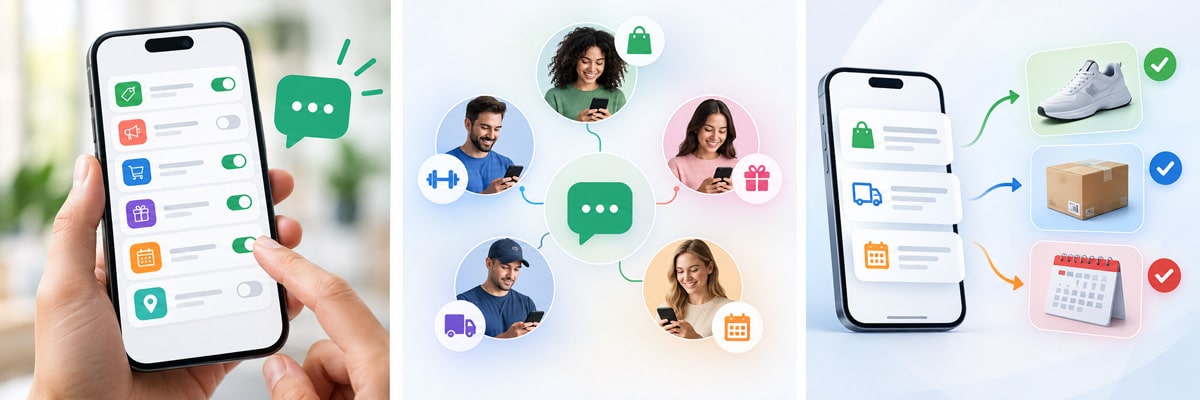
Possible Routing Actions Include:
- Sending a frequently asked question response
- Retrieving an order status
- Sharing a secure account link
- Updating an appointment
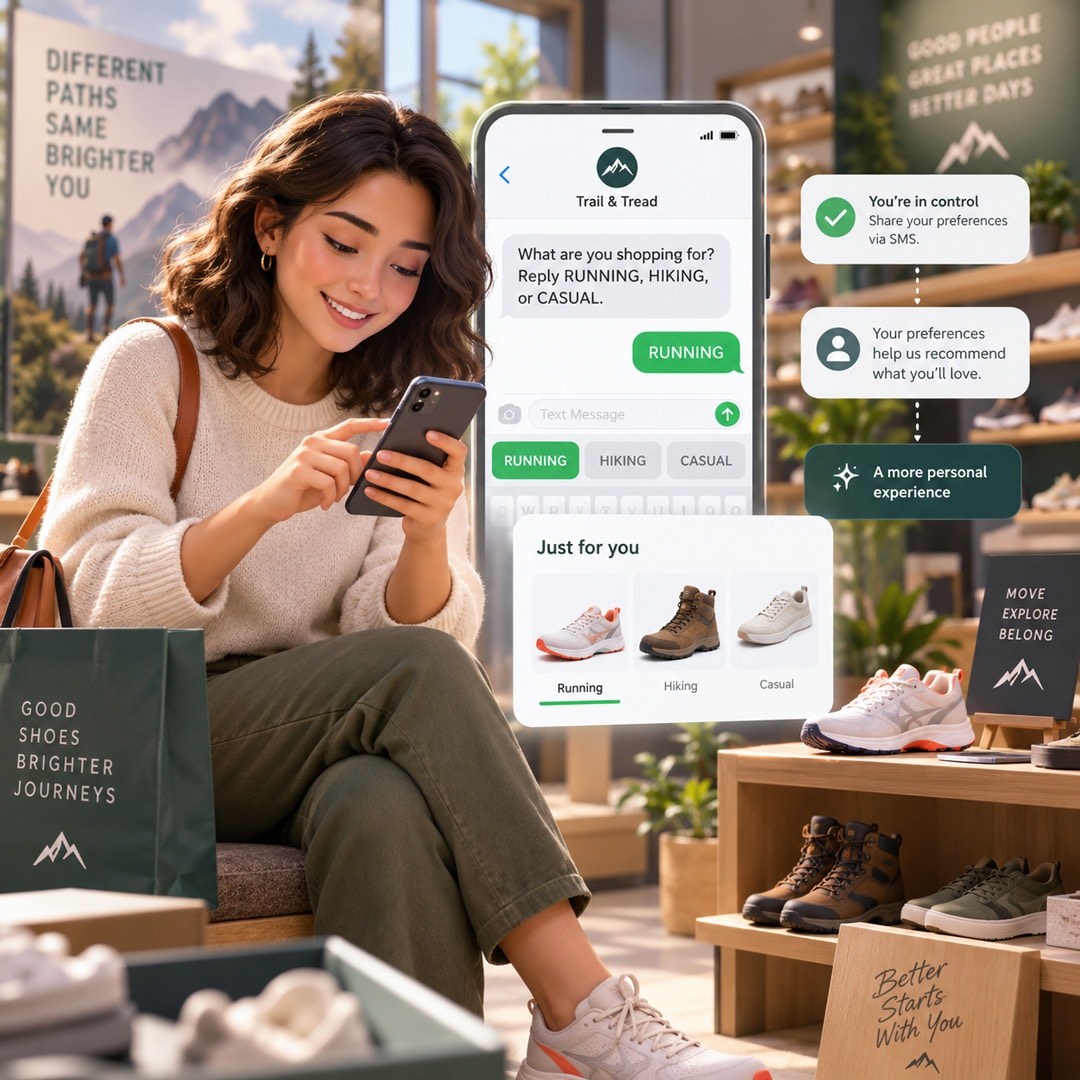
- Collecting a product preference
- Creating a support ticket
- Sending the conversation to a sales agent
- Escalating an urgent complaint
AI-based intent routing can guide a conversation, trigger a workflow, or send the customer to the most appropriate employee.
Consequently, businesses can reduce unnecessary transfers. Customers also spend less time explaining the same problem to several departments.
3. Ask Useful Follow-Up Questions
Many customer requests lack enough information for an immediate answer. Therefore, the AI should ask one simple follow-up question rather than guess.
For example:
Customer: “Can I change my delivery?”
Auto-reply: “Certainly. Would you like to change the delivery date or the delivery address?”
After the customer chooses, the system can continue with the appropriate workflow.
Another example might involve product recommendations:
Customer: “I need a gift.”
Auto-reply: “What budget would you like to stay within: under $25, under $50, or above $50?”
These questions help the system collect useful information while keeping the interaction short. However, the flow should avoid turning a simple request into a long questionnaire.
4. Personalize Replies With Customer Data
AI becomes more useful when it can access approved customer information. For example, it may retrieve an order number, appointment time, loyalty balance, or subscription status.
A generic reply might say:
“Your order is on the way.”
A more useful reply could say:
“Your order #4821 shipped today and should arrive Friday. Track it here: [link].”
However, businesses should limit which data the AI can access. It should not reveal sensitive information without identity verification.
Suitable Personalization May Include:
- First name
- Recent order
- Delivery status
- Appointment details
- Loyalty points
- Product preferences
- Subscription schedule
Nevertheless, payment information, passwords, medical details, and other sensitive data require stricter controls.
5. Use Approved Answers Instead of Unrestricted Generation
An AI model can generate natural responses, but completely unrestricted replies create risk. It may provide an incorrect policy, invent product availability, or promise an action the business cannot complete.
Therefore, companies should build a controlled knowledge base with approved information, including:
- Store hours
- Shipping policies
- Return rules
- Product specifications
- Appointment procedures
- Subscription options
- Support contact details
- Current promotions
The AI can then use that information to create a concise answer. Additionally, the system should avoid answering when the required data is missing or uncertain.
A safe reply might say:
“I could not confirm that item’s availability. I’m sending your question to our store team.”
This response protects trust better than a confident but inaccurate answer.
6. Detect When a Human Should Take Over
AI should handle predictable, low-risk conversations. However, employees should manage complaints, payment disputes, unusual requests, and emotionally sensitive situations.
Escalation triggers may include:
- Repeated customer confusion
- Negative or angry language
- Refund disputes
- Fraud concerns
- Account security problems
- Legal threats
- Requests outside the approved knowledge base
- A direct request for a person
When the conversation moves to an agent, the system should preserve its context. The employee should see the customer’s messages, detected intent, completed steps, and relevant account information. Current AI-to-human handoff systems can transfer conversations while providing agents with summaries and existing context.
As a result, customers do not need to start again.
7. Build Fallback Responses
AI will not understand every message. Therefore, every flow needs a useful fallback.
Instead of replying, “Invalid response,” the system could write:
“I’m sorry, I did not understand that. Reply ORDER for order help, APPOINTMENT for booking help, or AGENT to speak with our team.”
The flow may try once or twice before transferring the conversation. However, it should not repeatedly ask the same question when the customer remains stuck.
Additionally, the system should recognize spelling mistakes, informal language, abbreviations, and short replies whenever possible.
8. Protect Consent and Opt-Out Requests
AI must never interfere with SMS consent management. If a customer sends a recognized opt-out request, the messaging platform should suppress future covered messages immediately.
Moreover, businesses should separate promotional consent from customer service conversations. A customer who asks about an order does not automatically agree to receive future marketing texts.
The Flow Should Also Recognize Requests Such as:
- “Stop texting me”
- “Remove my number”
- “I don’t want offers”
- “Unsubscribe me”
Therefore, compliance logic should operate before marketing or conversational automation.
Test the Flow Before Launching
Before activating an AI auto-reply flow, test it with realistic customer language.
Include:
- Clear questions
- Misspelled words
- Several questions in one message
- Unsupported requests
- Angry replies
- Opt-out language
- Missing account details
- Requests for human help
Additionally, review transcripts after launch. Look for incorrect classifications, repeated fallbacks, unnecessary transfers, and answers that create confusion.

Ultimately, AI can make SMS auto-reply flows faster, more flexible, and easier for customers to use. It can understand intent, route messages, ask follow-up questions, personalize answers, and support human agents.
However, successful automation needs controlled information, strong safeguards, and clear escalation paths. When businesses combine AI efficiency with human judgment, they can provide quicker SMS support without making conversations feel robotic.