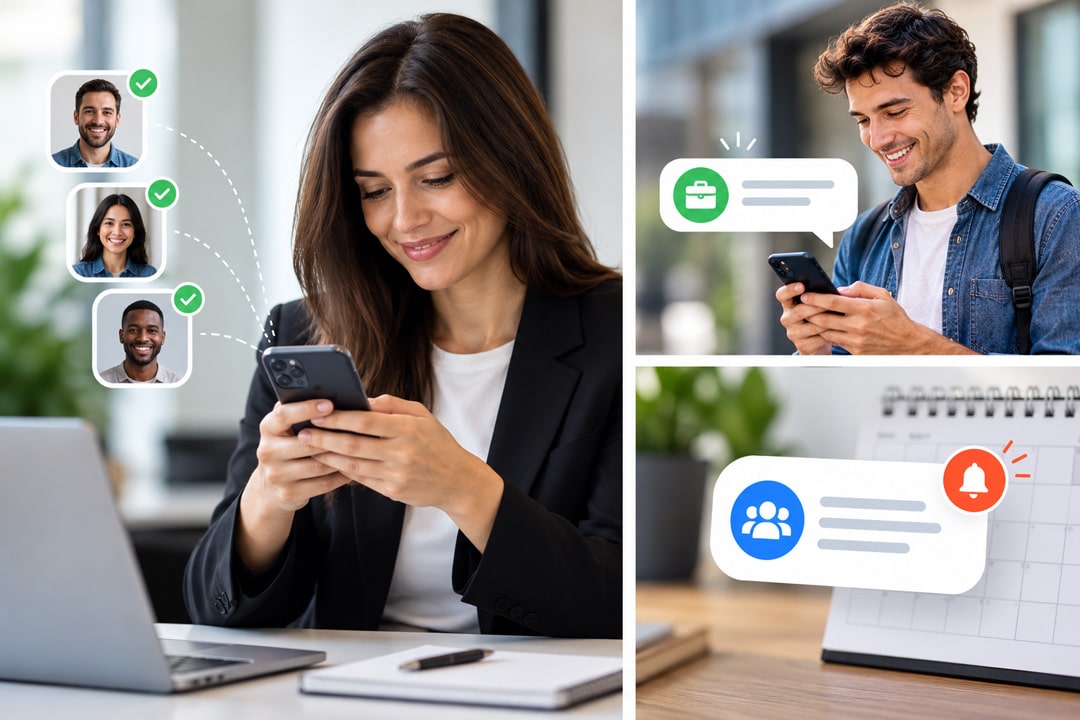
SMS marketing works best when subscribers receive messages they actually want. However, customer interests change over time. Someone who originally joined for discounts may later care more about product alerts, appointment reminders, loyalty rewards, or local events.
Traditionally, subscribers have faced a simple choice: continue receiving every message or opt out completely. An SMS preference center creates a better option.
Instead of forcing customers into an all-or-nothing decision, businesses can let subscribers choose the types of texts they receive, how often they receive them, and sometimes which locations or product categories interest them.
As a result, marketers can reduce unnecessary messages while building more relevant SMS experiences. Preference data can also improve segmentation, automation, personalization, and overall list quality.
What Is an SMS Preference Center?
An SMS preference center is a page or account interface where subscribers can manage their text messaging preferences.
Depending on the business, customers might choose:
- Promotional offers
- New product announcements
- Back-in-stock alerts
- Loyalty rewards
- Local store updates
- Event reminders
- Educational content
- Appointment notifications
- Order and service updates
- Preferred message frequency
For example, a retail subscriber may want restock alerts and loyalty rewards but not weekly sale messages.
Instead of losing that customer through a full unsubscribe, the retailer can let them disable promotions while keeping the categories they value.
Therefore, preference centers can turn a potential opt-out into a more relevant subscriber relationship.
Why SMS Preferences Matter More Than Ever
Customers receive messages from retailers, banks, healthcare providers, delivery companies, restaurants, apps, and other organizations. As a result, every unnecessary notification competes for attention.
SMS also feels more personal than many other marketing channels. So irrelevant texts can quickly create frustration.
A preference center gives subscribers greater control. Meanwhile, businesses gain information they can use to target better.
Instead of asking only, “Is this subscriber opted in?” marketers can ask:
- What does this customer want to hear about?
- Which products interest them?
- How frequently do they want texts?
- Which store or location matters to them?
- Do they prefer promotional or informational messages?
As a result, SMS becomes less dependent on broad mass campaigns.
1. Let Subscribers Choose Message Topics
Topic selection represents one of the simplest preference-center features.
For example, an e-commerce retailer could offer:
☑ New arrivals
☑ Sales and promotions
☑ Back-in-stock alerts
☑ Loyalty rewards
☑ Product tips
Meanwhile, a fitness business might offer class reminders, membership offers, event announcements, and wellness tips.
This approach allows customers to shape their experience.
Furthermore, topic preferences also create useful segments automatically. Someone interested in running products does not need every cycling promotion. Likewise, customers interested in workshops may not care about general retail discounts.
As a result, marketers can send fewer campaigns while increasing relevance.

2. Give Customers Control Over Frequency
Message frequency plays a major role in SMS fatigue.
One subscriber may happily receive several useful texts per week. However, another may prefer only important monthly updates.
A preference center could provide choices such as:
- All relevant updates
- Weekly highlights
- Important offers only
- Monthly updates
Businesses do not need to offer unlimited customization. In fact, too many choices can make the experience unnecessarily complicated.
Instead, marketers should provide a few meaningful options that match their actual messaging program.
For example, a customer selecting “important offers only” can enter a lower-frequency segment. As a result, the business keeps the subscriber without continuing a message cadence they find excessive.
3. Collect Product And Interest Preferences
Preference centers can also improve personalization.
Suppose an outdoor retailer sells hiking, camping, cycling, fishing, and winter sports products. Asking customers which categories interest them gives the marketing team direct information, rather than requiring the system to infer everything from browsing behavior.
A subscriber might select:
Interests: Hiking + Camping
The retailer can then prioritize trail equipment, tents, outdoor clothing, and related promotions.
Moreover, this type of declared preference often feels less intrusive than behavioral personalization because the customer voluntarily provided the information.
As a result, brands can personalize messages without making customers wonder how much activity the company monitors.
4. Use Location Preferences For Local Messaging
Businesses with multiple locations can add store or geographic preferences.
A national restaurant chain, retailer, gym, dealership, or entertainment company may operate dozens or hundreds of locations. However, a subscriber usually cares about only one or two.
Allowing customers to select a preferred location can improve messages about:
- Store events
- Local promotions
- Opening hours
- Temporary closures
- New locations
- Regional inventory
- Local appointments
For instance:
“Downtown location: Our Saturday workshop starts at 11 a.m. Reserve your place: [link].”
This message offers more value than sending every subscriber information about every store.
5. Connect Preferences With SMS Automation
Preference data becomes especially powerful when it connects directly to automated workflows.
Imagine a customer selects:
- Interest: Skincare
- Messages: Restocks + Offers
- Frequency: Weekly
The system can use those selections to determine which automations the customer enters.
Later, when a skincare product returns to stock, the subscriber can receive an appropriate alert. Meanwhile, the platform can exclude them from unrelated electronics or clothing campaigns.
A simple workflow might look like:
Preference Update → Customer Profile → Segment → Automation → Relevant SMS
Therefore, preference centers should not operate as isolated webpages. Instead, businesses should connect them with their CRM, e-commerce platform, customer profiles, and marketing automation tools.
6. Keep Transactional And Promotional Preferences Clear
Customers may want to reduce marketing messages without losing important service information.
For example, someone might opt out of promotional offers but still expect an order confirmation, security alert, appointment update, or other service-related communication when applicable.
Therefore, preference centers should clearly distinguish different categories instead of presenting everything under one vague “SMS notifications” switch.
A simple structure could include:
| Message Category | Example |
|---|---|
| Promotions | Discounts and sales |
| Product Updates | Launches and restocks |
| Loyalty | Rewards and points |
| Service Updates | Account or order information |
| Events | Registrations and reminders |
However, businesses still need to follow the consent and messaging rules that apply to each communication type and jurisdiction.
7. Never Turn a Preference Center Into an Opt-Out Barrier
A preference center should provide additional control. It should never make unsubscribing harder.
Subscribers must still have a clear way to stop applicable SMS messages. In the U.S., FCC rules address consumers’ ability to revoke consent to robotexts through reasonable methods, while messaging providers commonly support keywords such as STOP, UNSUBSCRIBE, END, CANCEL, and QUIT.
Therefore, do not respond to a STOP request by requiring the customer to visit a preference page before the opt-out takes effect.
Instead, honor the opt-out appropriately and use preference centers for subscribers who want to fine-tune their communication rather than leave entirely.
Moreover, SMS platforms can support dedicated opt-in and opt-out flows and help with keyword handling, including configurable responses and language-specific options.
8. Make The Preference Center Mobile-Friendly
Most subscribers will open an SMS preference link on a smartphone. Therefore, the experience must work well on a small screen.
A strong preference page should:
- Load quickly
- Use large buttons
- Keep options simple
- Avoid unnecessary fields
- Show current selections clearly
- Save changes quickly
- Confirm successful updates
- Provide an obvious unsubscribe option
Additionally, avoid forcing subscribers to create an account simply to change basic communication settings.
The easier the process feels, the more likely customers will update their preferences instead of choosing a complete opt-out.
9. Ask For Preferences During Signup
Businesses do not always need to wait until subscribers become unhappy.
Instead, they can collect basic preferences during or shortly after signup.
For example:
Join our SMS list
Mobile number: ________
What would you like to receive?
☑ Offers
☑ New arrivals
☑ Restock alerts
However, keep the initial form short. Every additional field creates friction.
Therefore, another option is progressive profiling. First, collect the mobile number and required consent information. Then, ask for interests during the welcome flow.
This approach keeps signup simple while gradually improving the customer profile.
10. Measure Whether Preferences Improve SMS Performance
Preference centers should produce measurable improvements.
Marketers can monitor:
- Opt-out rate
- Click-through rate
- Conversion rate
- Messages sent per subscriber
- Revenue per recipient
- Preference update rate
- Engagement by topic
- Inactive subscriber rate
For example, suppose promotional frequency drops by 25%, while clicks and purchases remain stable. That could indicate that the business removed unnecessary messages without sacrificing results.
Similarly, a segment built from explicitly selected interests may outperform a broad campaign.
Therefore, success should not mean sending the maximum number of texts. Instead, businesses should measure whether each message contributes meaningful value.

Build An SMS Program Around Customer Choice
SMS preference centers represent a broader shift in text marketing: moving from list-based broadcasting toward customer-controlled communication.
Rather than treating every subscriber the same, businesses can let people choose topics, frequency, product categories, locations, and other useful preferences.
As a result, companies gain cleaner customer data while subscribers receive fewer irrelevant messages.
Most importantly, preference centers should complement—not replace—clear consent and easy opt-out processes. Businesses should still honor unsubscribe requests and maintain accurate suppression records.
Ultimately, the strongest SMS strategy does not ask, “How many texts can we send?” It asks, “Which texts does this customer actually want?”
Giving subscribers more control can reduce message fatigue, strengthen segmentation, improve personalization, and help businesses build an SMS audience that stays engaged for longer.